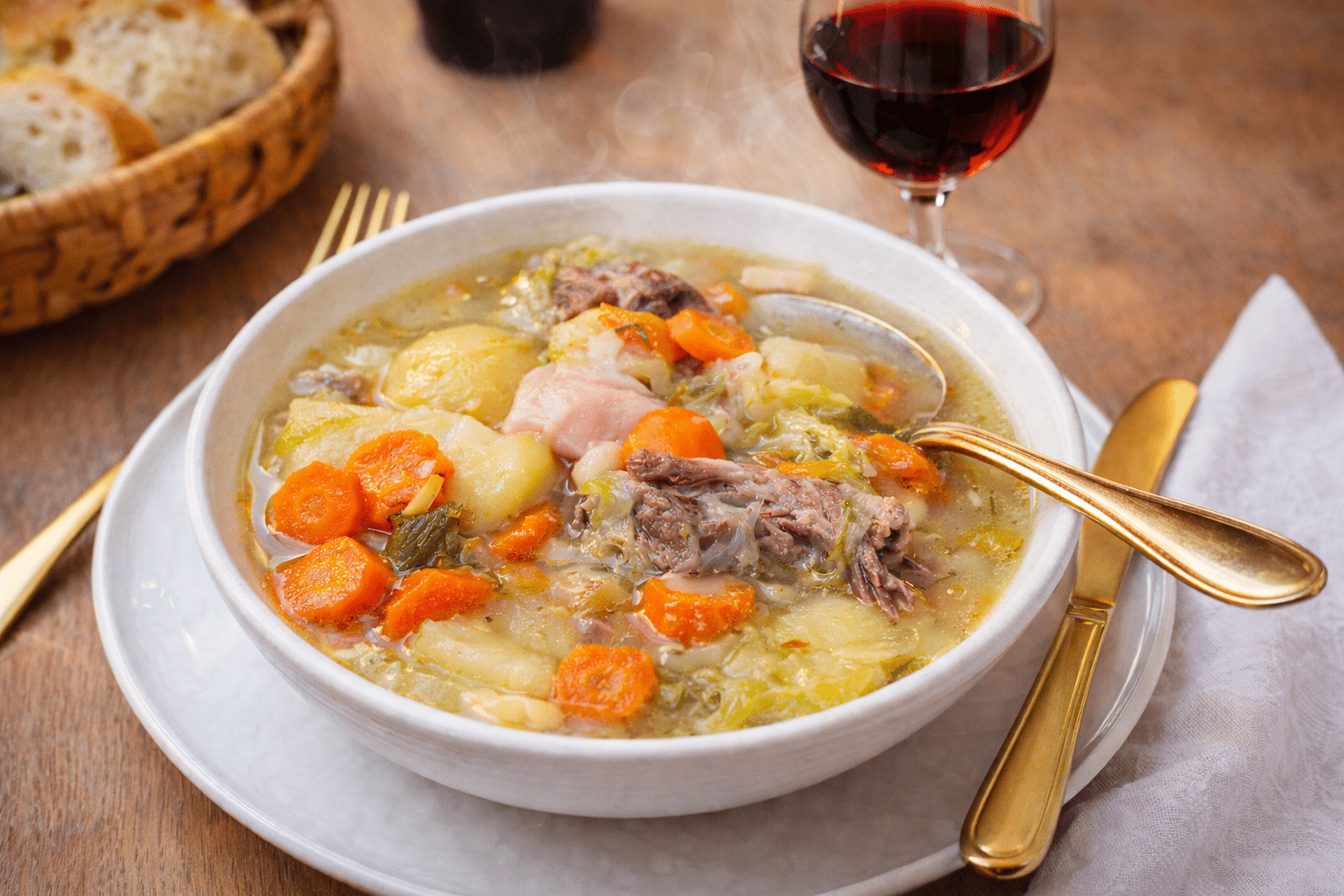
Garbure is one of the traditional dishes of Béarn. It is a thick soup that originated in the kitchens of Béarn, where cabbage, garden vegetables, and meat simmer for a long time by the fireplace. Garbure is a dish that has brought Béarn families together and warmed their hearts for generations. A true institution in the Heart of Béarn, discover the recipe for Béarn-style garbure, a dish that embodies warmth and generosity. Dig in!
What is authentic Béarnaise garbure?
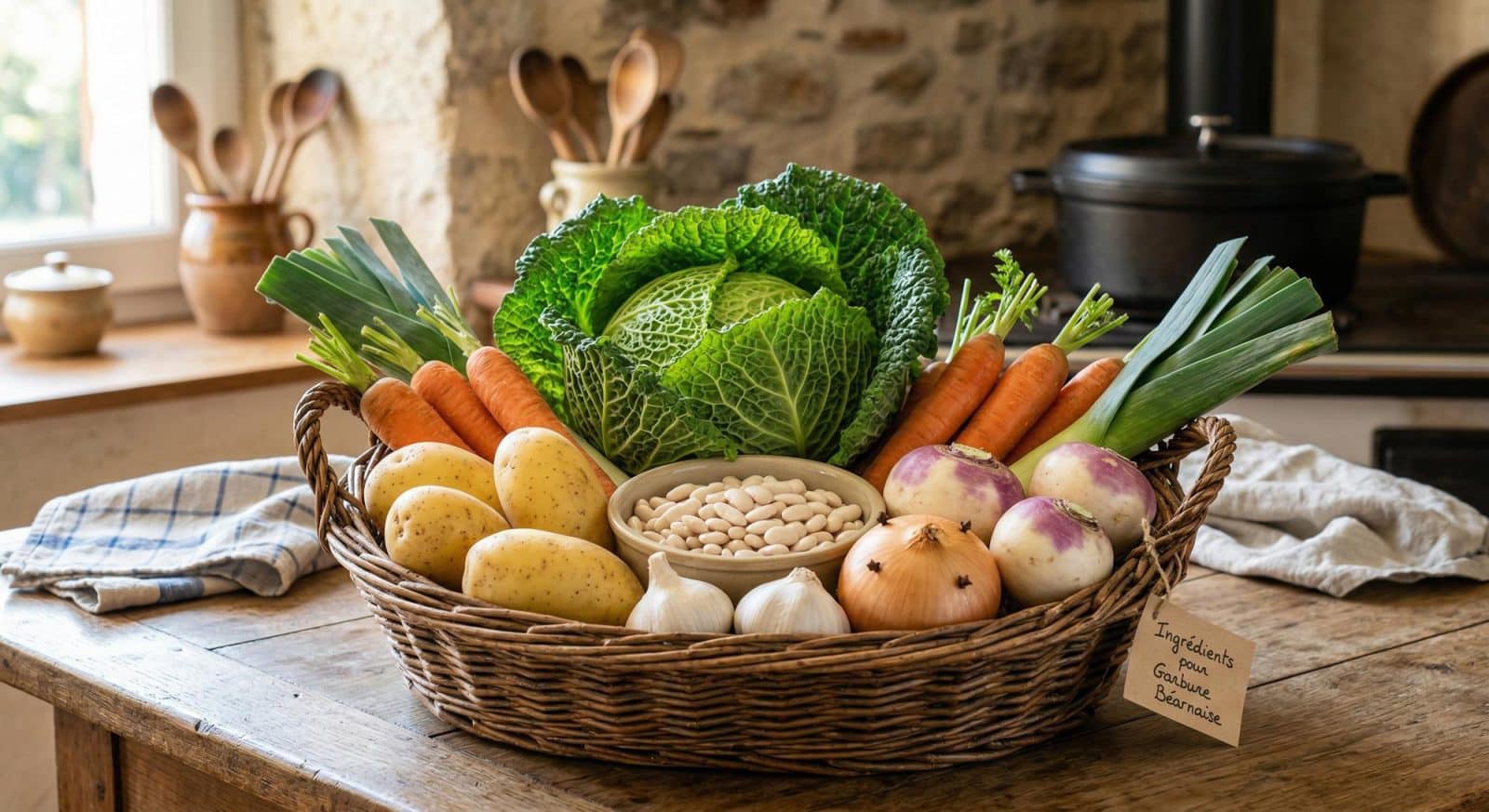
Garbure Béarnaise is first and foremost a thick soup, centered around kale and a base of seasonal vegetables: carrots, turnips, leeks, white beans, and potatoes. It’s a dish that simmers slowly, more like a stew than a light soup. A piece of duck confit is often added, and sometimes a ham bone or a piece of bacon. In homes throughout the Béarn region, it’s prepared in advance, as it tastes best when reheated. There’s no single recipe for garbure; it varies depending on the village in the Béarn, the family, and the time of year. Local tradition holds that the ladle placed in the center of the pot should stand upright on its own.
Garbure: The Story of a Signature Dish from Béarn
Garbure originates from the peasant cuisine of southwestern France, specifically the Béarn region. For a long time, it was the main evening meal, with vegetables from the garden and duck or ham from the farm. It was a staple dish—economical and nutritious—capable of sustaining farmworkers. The poorest families often made do with vegetables and a little fat to thicken the broth. In the past, it was left to simmer in the fireplace, hanging from the rack, and was transformed over the course of several days by adding vegetables or starchy foods depending on what leftovers were available. Today, garbure has a place on every table in Béarn, particularly in the many traditional restaurants of the Cœur de Béarn, but also in guesthouses that want to serve “local” fare.
Garbure and the Béarn Region
Garbure reflects the Bearn region and emphasizes locally sourced ingredients.
- The Béarn Bean-Corn: This is a white bean with a very thin skin and a tender, melt-in-your-mouth texture. It is traditionally planted at the base of cornstalks, which serve as its natural support.
- Cavalier Cabbage or Milan Cabbage: You need a sturdy curly cabbage that can withstand long cooking times without falling apart completely.
- Camayou: This is the ham bone. It is essential and is not eaten, but it salts and flavors the cooking water from the start.
- Root vegetables: Firm-fleshed potatoes, carrots, turnips, and leeks add a mild sweetness that helps thicken the broth.
A recipe from the Tourist Office team!
Here is the recipe recommended by the tourist office for making Béarnaise garbure. Allow plenty of time, as garbure always tastes better when reheated.
Ingredients
Vegetables:
- 1 large head of curly green cabbage (about 1 kg)
- 500 g white beans (Tarbais or corn beans), soaked overnight
- 4 firm-fleshed potatoes
- 4 carrots
- 2 leeks
- 3 turnips
- 1 onion studded with 2 cloves
- 2 cloves of garlic
Meat:
- 1 piece of dry-cured ham on the bone (camayou)
- 4 to 6 duck confit legs (depending on appetite)
- Optional: A piece of pork belly or lightly salted pork shank
Seasoning:
- Salt (use sparingly, because of the ham)
- Pepper
- Espelette pepper
- Thyme, bay leaf
- Duck fat
Preparation
Preparation:
- Prepare the vegetables: Peel and wash all the vegetables. Cut the carrots, turnips, and potatoes into large cubes (don’t cut them too small to avoid them turning into mashed potatoes). Slice the leeks thinly. Cut the cabbage into quarters, remove the tough core, blanch it for 5 minutes in boiling water, then drain it and cut it into coarse strips.
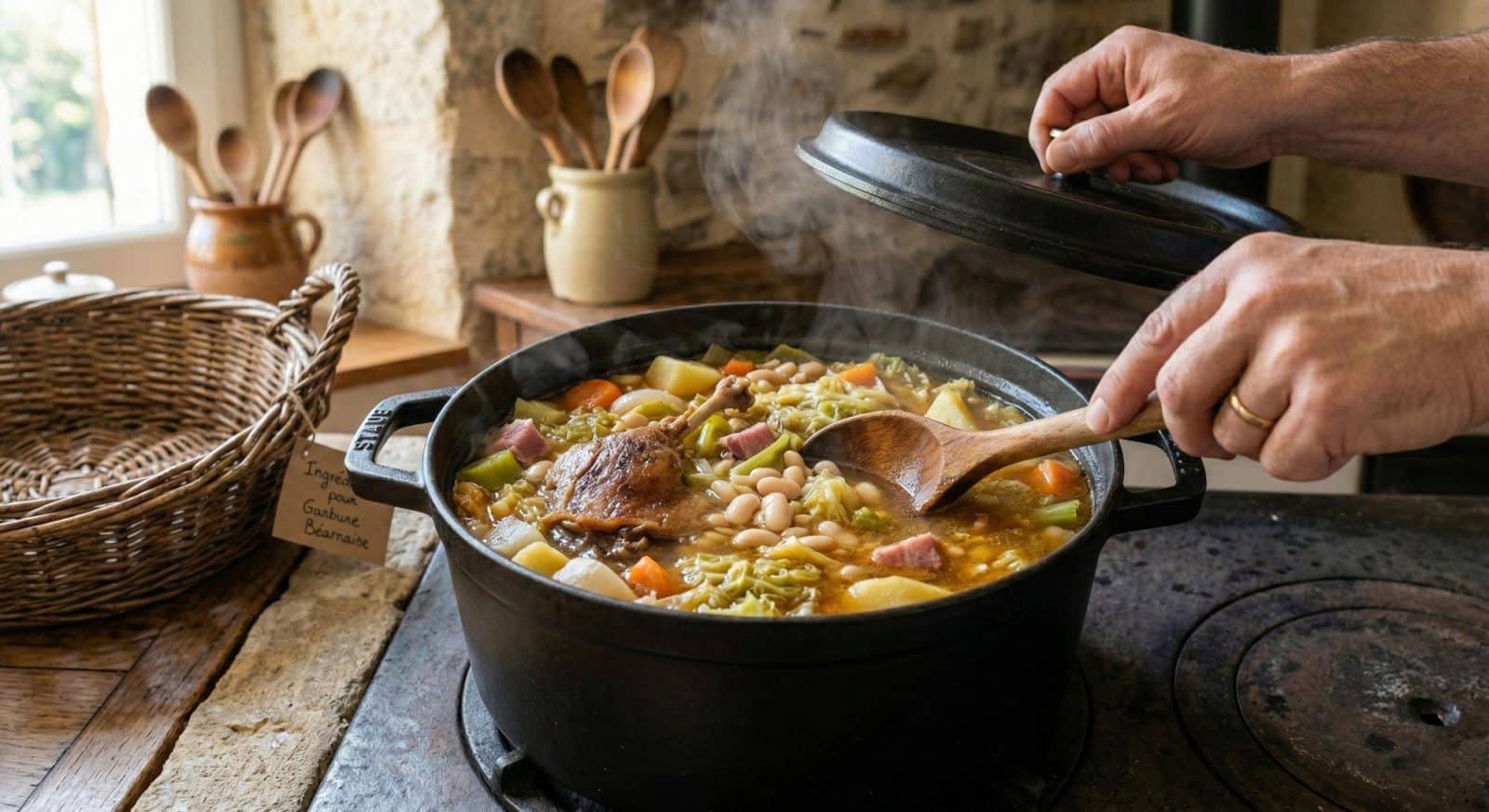
- Starting the broth: In a very large pot, heat 3 to 4 liters of cold water. Add the ham hock (and the shank, if using), the pricked onion, the thyme, and the bay leaf. Bring to a boil, skim off any foam if necessary, and let it simmer over low heat for 1 hour to develop the flavor base.
- Cooking the beans and firm vegetables: Add the drained white beans to the broth. Simmer gently for about 45 minutes to 1 hour. Then add the carrots, turnips, and leeks. Continue cooking for 30 minutes.
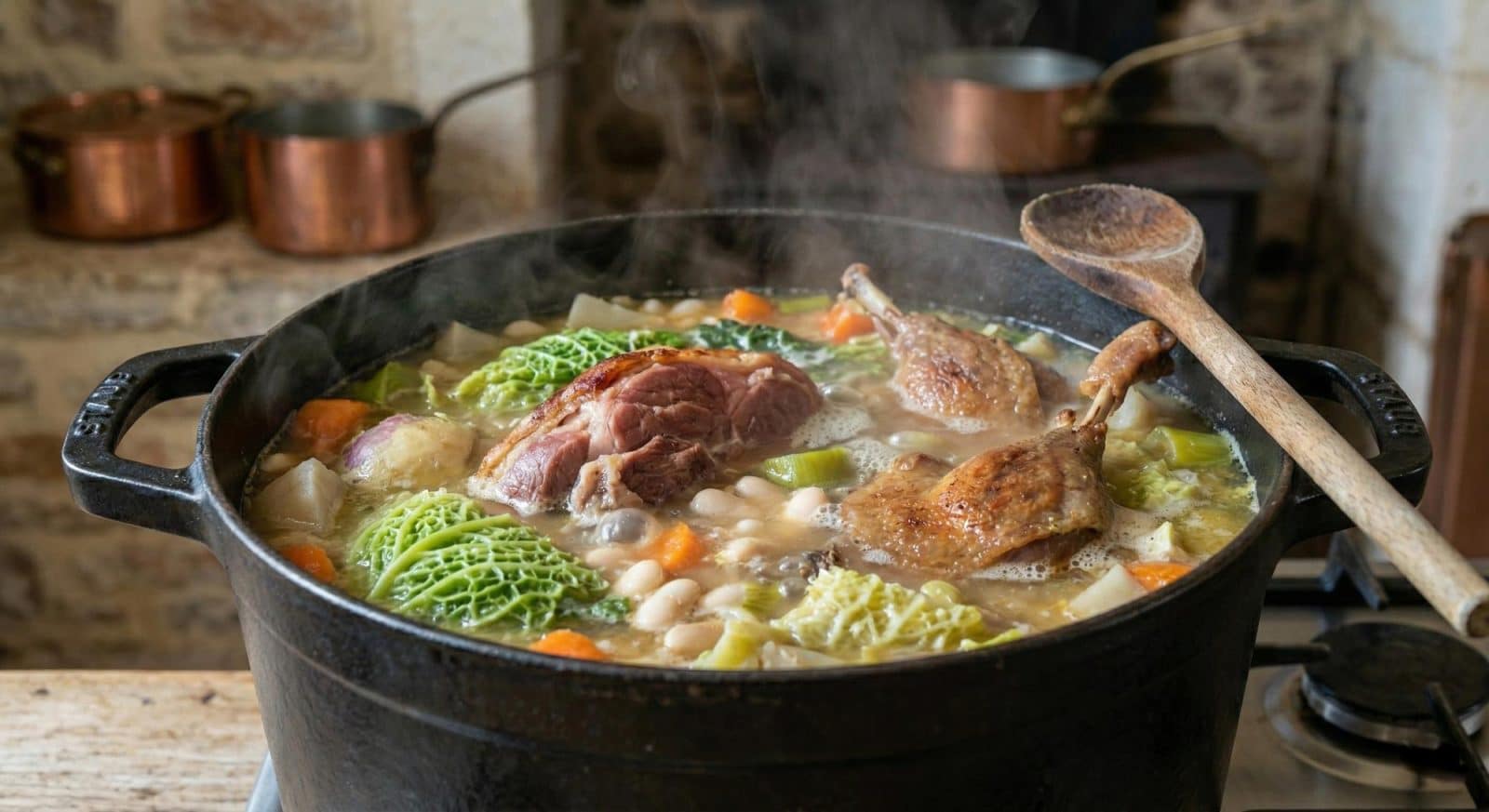
- Adding the cabbage and potatoes: Stir in the blanched cabbage and potatoes. Also add the minced garlic and a pinch of Espelette pepper. This is when the “magic” happens. Let it simmer over very low heat for another 1 hour and 30 minutes. The potatoes should start to break down slightly to thicken the broth.
- The finishing touch: the confit. About 15 to 20 minutes before the end of cooking, roughly trim the fat from your duck confit thighs and add them to the pot. They should just be warmed through and absorb the broth without falling apart.
Tip from Chef Cœur de Béarn
We recommend following an old tradition familiar to all garbure lovers: making chabrot.
When there’s a little broth left in the soup bowl, pour in a splash of red wine. Stir it all together and drink it straight from the bowl—no spoon needed! This warm mixture of rich broth and wine is considered by older generations to be a tonic.